Can You Rely on the Sun When the Power Goes Out?
Every year, millions of people experience power outages that last hours, days, or even weeks. Whether it’s due to storms, grid failures, or just living off-grid, the frustration is the same. Gas generators are noisy, smelly, and require constant refueling. So, many are asking a simple question: What is a solar powered generator, and how can it help me?
This guide exists for anyone tired of being left in the dark—literally. We’ll break down how a solar powered generator works, what it’s made of, how it compares to traditional gas generators, and why it’s becoming a go-to choice for backup power and off-grid living.
By the end, you’ll know if a solar powered generator fits your needs.
What is a Solar Powered Generator?
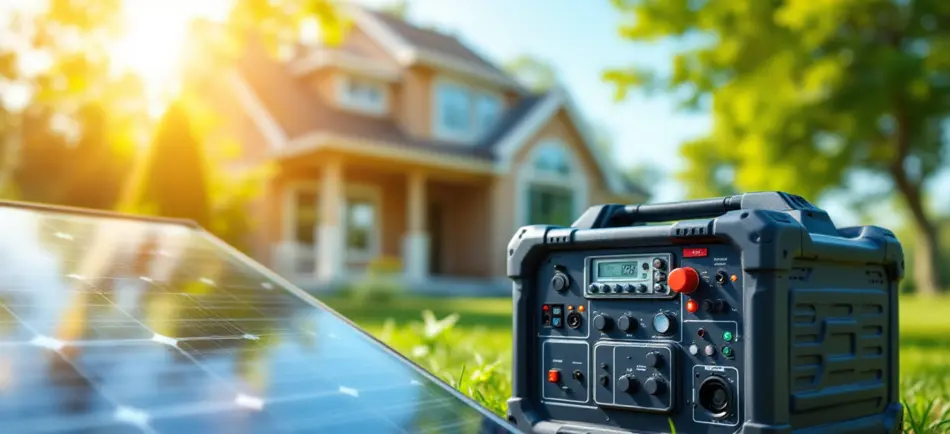
A solar powered generator is a device that captures sunlight and converts it into electrical energy for immediate use or storage. Think of it as a portable power station, but instead of running on gasoline or diesel, it runs quietly on sunlight.
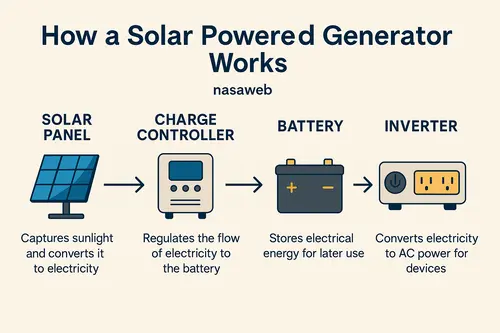
It combines three main components:
- Solar Panels – collect sunlight and turn it into electricity.
- Battery Storage – stores the generated electricity for later use.
- Inverter – converts the stored energy into usable AC power for your devices.
Unlike the loud, exhaust-spewing gas generators, a solar powered generator operates in silence and produces zero emissions. It’s portable, renewable, and low-maintenance.
Picture charging your phone, running a fridge, or keeping medical devices powered — all from energy captured by the sun.
Key Benefits of a Solar Powered Generator
Why are so many people switching? Here’s what makes a solar powered generator an appealing choice:
✅ Clean & Quiet Operation
No noise. No fumes. Perfect for homes, RVs, or campsites where peace and clean air matter.
✅ Free Energy from the Sun
Once you buy the system, the sunlight is free. Say goodbye to fuel costs and refills.
✅ Low Maintenance
Fewer moving parts mean less wear and tear. No oil changes, no spark plugs, no trips to the gas station.
✅ Emergency Preparedness
Great for blackouts, hurricanes, or any situation where reliable backup power is critical.
✅ Portable & Versatile
From outdoor adventures to home emergencies, a solar powered generator is flexible enough to follow you anywhere.
How Does a Solar Powered Generator Work?
Let’s simplify the process into a few clear steps:
Step 1: Sunlight Collection
The solar panels absorb sunlight and convert it into direct current (DC) electricity. This happens through photovoltaic (PV) cells that react to sunlight.
Step 2: Energy Storage
The DC electricity flows into a battery bank where it’s stored. Modern batteries (like lithium-ion) are compact and efficient.
Step 3: Power Conversion
The inverter takes the stored DC power and converts it into alternating current (AC), which is what your appliances and devices use.
Step 4: Powering Devices
You plug in your devices — laptops, phones, refrigerators, CPAP machines, or even small power tools — and run them straight from your solar powered generator.
Step 5: Recharge & Repeat
As long as there’s sunlight, your generator keeps producing energy, replenishing the battery, and keeping you powered.
Common Mistakes to Avoid:
- Overestimating Capacity: Know your generator’s wattage limits.
- Poor Solar Panel Placement: Angle panels toward the sun without obstructions.
- Ignoring Battery Health: Deeply discharging batteries reduces lifespan.
Things to Watch For Before Buying
Not all solar powered generators are created equal. Here are some key points to consider before purchasing:
⚠️ Power Output
Check both continuous wattage (what it can supply constantly) and peak wattage (for short surges). Ensure it can handle your essential devices.
⚠️ Battery Capacity
Measured in watt-hours (Wh), this tells you how much energy the generator can store. More Wh means longer run times.
⚠️ Charging Speed
Some models charge in a few hours, others take a full day. Look for systems with fast charging if you’re in a hurry.
⚠️ Portability
Weight and size matter, especially if you plan to travel with it. Some models are compact for camping, others are larger for home backup.
⚠️ Safety Features
Look for overcharge protection, temperature regulation, and surge protection to protect your devices and the generator itself.
⚠️ Expandability
Some solar powered generators allow you to add extra panels or batteries, making them future-proof as your needs grow.
Practical Examples: How People Use Solar Powered Generators
🏡 Home Backup During Blackouts
A solar powered generator keeps essential devices running during outages — fridges, WiFi routers, lights, medical equipment — without the noise and fumes of gas generators.
🚐 RV Adventures & Camping
For those living the van life or spending weekends off-grid, a solar powered generator provides quiet, renewable energy for laptops, fans, cooking gear, and more.
What Does a Solar Powered Generator Cost?
Prices vary widely based on size, capacity, and brand:
- Small Units (300-500Wh): $300 – $600 (ideal for phones, small devices).
- Medium Units (1000-2000Wh): $800 – $2000 (can run fridges, CPAPs).
- Large Units (3000+Wh): $2500+ (suitable for whole-home backup for short periods).
Hidden Costs:
- Extra Solar Panels (for faster charging).
- Cables & Accessories.
- Optional Extra Batteries.
The Long-Term Value:
- No Fuel Costs.
- Minimal Maintenance.
- Quiet & Clean Operation.
Over time, a solar powered generator pays for itself by cutting fuel costs and reducing maintenance headaches.
Expert Tips for Getting the Most Out of Your Solar Powered Generator
- Match Your Generator to Your Needs: Don’t overspend on capacity you’ll never use. Calculate your device wattages and buy accordingly.
- Position Panels Smartly: Move panels throughout the day to follow the sun and maximize charging efficiency.
- Pre-Charge Before Trips or Storms: Always start with a full battery when you know you’ll need backup.
- Use Energy Wisely: Prioritize essentials. Don’t try to run everything at once if you’re low on stored energy.
- Regularly Check Firmware Updates: Some modern units offer software upgrades for better performance and safety.
FAQs: Common Questions About Solar Powered Generators
Can a solar powered generator run a refrigerator?
Yes, if the generator’s wattage and battery capacity are sufficient. A typical fridge uses 100-800 watts, so a mid to large-size generator is recommended.
How long does it take to charge a solar powered generator?
Depending on panel size and sunlight availability, charging can take from 4 to 12 hours. Some systems offer AC wall charging as a backup.
Are solar powered generators weatherproof?
The generator units are often weather-resistant, but solar panels need to be handled with care. Avoid using them in severe conditions without protection.
How long do the batteries last?
With proper use, lithium-ion batteries can last 5-10 years. Lifespan depends on charge cycles and maintenance.
Can I use a solar powered generator at night?
Absolutely. The battery stores energy generated during the day for nighttime use.
Ready to Let the Sun Work for You?
A solar powered generator is more than a gadget — it’s a quiet, clean, and reliable way to keep your life running smoothly when the grid fails or when you’re off exploring. From emergency backup to outdoor adventures, these systems bring freedom from fuel dependence and maintenance headaches.
The sun shines for free. It’s time to take advantage of it.
Next step? To explore more official resources on solar technology and its benefits, check out the U.S. Department of Energy’s Solar Energy Technologies Office.