LiFePO4 Solar Battery Guide: Best Lithium-Iron for Home Power
For years, the narrative surrounding lithium batteries was dominated by headlines about hoverboards catching fire or smartphones banned from airplanes. While those concerns were valid for specific high-density chemistries, they unfortunately cast a shadow over a quieter, safer revolution happening in the energy sector. The technology powering the modern off-grid home is vastly different from the battery in your laptop.
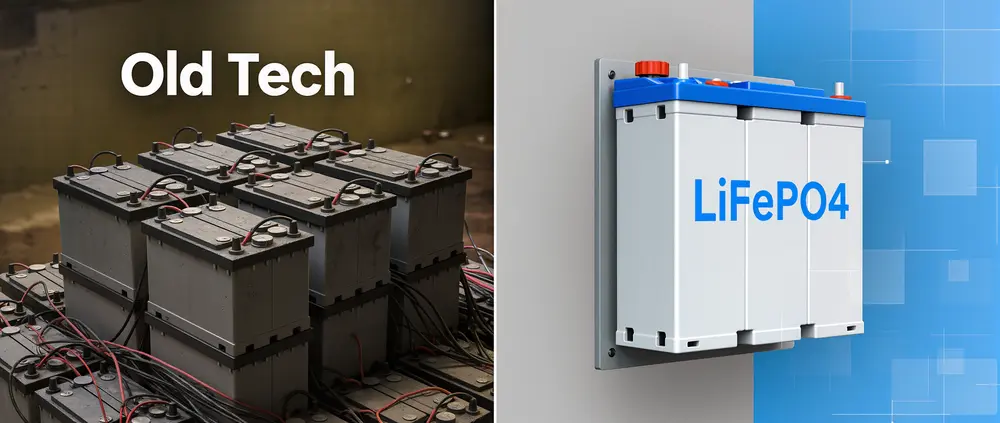
We have entered the era of LiFePO4 solar batteries. Also known as Lithium Iron Phosphate (LFP), this chemistry has emerged as the non-volatile, long-lasting successor to older lead-acid and volatile lithium technologies. If you are looking to store solar energy for your home, understanding why LiFePO4 is the superior standard is the first step toward energy independence.
The Technology: LiFePO4 vs. NMC
To understand why LiFePO4 solar batteries are taking over the market, we must look at the chemistry. Most electric vehicles (EVs) and portable electronics use NMC (Nickel Manganese Cobalt) batteries. In those applications, weight and size are the primary constraints—you need the lightest battery possible to extend a car’s range or keep a phone slim.
However, in a home solar setup, the battery sits stationary in a garage or utility room. Weight is rarely a primary concern; safety and longevity are. This is where the trade-off becomes clear.
The NMC Compromise
NMC batteries offer high energy density. They pack a lot of power into a small, lightweight footprint. However, this density comes with volatility. The oxide structure in NMC cathodes can release oxygen when stressed or overheated, leading to a self-fueling fire known as “thermal runaway.” Furthermore, NMC batteries typically offer a cycle life of 800 to 1,000 cycles before they degrade significantly.
The LiFePO4 Advantage
LiFePO4 solar batteries are chemically different. They use a phosphate-based cathode that is incredibly stable. While they are heavier and bulkier than their NMC counterparts, they are virtually incombustible. The chemical bond between the iron, phosphorous, and oxygen is far stronger, meaning the battery will not release oxygen even if punctured or short-circuited.
Beyond safety, the longevity is unmatched. A standard LiFePO4 cell is rated for 4,000 to 6,000+ cycles at 80% depth of discharge. In a daily cycling scenario (charging and discharging once a day), an NMC battery might last 3 years, whereas a LiFePO4 battery can easily last 10 to 15 years.
Finding the Best LiFePO4 Battery for Off Grid Solar Systems
When searching for the best LiFePO4 battery for off grid solar systems, you will encounter a confusing array of voltages, amp-hours, and box shapes. To make the right choice, you must look beyond the brand name and analyze the form factor and system architecture.
Form Factor: The Rise of the Server Rack
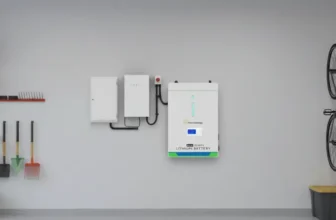
Traditionally, home batteries were proprietary, wall-mounted units that looked like sleek white appliances. While aesthetically pleasing, they were often difficult to service and expensive to expand.
Recently, the market has shifted toward “Server Rack” batteries. These are standardized, 19-inch wide modules that slide into standard IT server cabinets. This approach allows homeowners to stack multiple 5kWh battery modules vertically. It saves floor space, allows for easy swapping of faulty units, and generally offers the best price-per-kWh ratio.
Voltage Standards: Why 48V Wins
While 12V systems are standard for RVs and small boats, they are inefficient for whole-home power. When you lower voltage, you must increase amperage to get the same power wattage. High amperage generates heat and requires massive, expensive copper cabling.
For a home system, 48V (specifically the 51.2V nominal standard of LiFePO4) is the gold standard. It allows for thinner wires, runs cooler, and is compatible with high-capacity hybrid inverters that can run air conditioners and well pumps.
Expandability and Modularity
The best LiFePO4 battery for off grid solar systems is one that grows with you. Your energy needs today may not match your needs in five years (e.g., buying an electric vehicle). Look for battery systems that allow parallel connections. A good system should allow you to start with one or two batteries (10kWh) and expand to six or eight batteries (30-40kWh) simply by plugging in a new module, without needing to replace the inverter.
System Sizing & Cost Analysis
The most common hesitation for new solar adopters is the price tag. It is essential to look at the math objectively by analyzing lithium iron phosphate solar battery price vs lead acid.
The Sticker Shock Myth
If you look strictly at the upfront purchase price, a lead-acid setup (AGM or Flooded) appears significantly cheaper—often half the price of lithium. However, this is a “false economy” driven by the limitations of lead-acid chemistry.
Usable Capacity: The Depth of Discharge (DoD) Factor
When you buy a 10kWh lead-acid battery bank, you do not actually have 10kWh of energy. To prevent permanent damage, you generally cannot discharge lead-acid batteries below 50%. This means a 10kWh lead-acid bank only provides 5kWh of usable energy.
In contrast, LiFePO4 solar batteries can be safely discharged to 80%, 90%, or even 100% of their capacity (though 80% is recommended for maximum life). To get the same usable energy as a single lithium battery, you would need to buy twice as many lead-acid batteries. When you adjust for usable capacity, the price gap narrows immediately.
Cost Per Cycle
The true economic metric is the “Cost Per Cycle.” Let’s compare the lifespans:
- Lead Acid: ~500 to 1,000 cycles (approx. 2-4 years of daily use).
- LiFePO4: ~4,000 to 6,000 cycles (approx. 10-15+ years of daily use).
Over a 10-year period, a lead-acid user will likely have to replace their entire battery bank 3 or 4 times. The LiFePO4 user will still be using their original bank. When analyzing lithium iron phosphate solar battery price vs lead acid over a decade, lithium is mathematically the cheaper option, usually costing 30-50% less in the long run despite the higher entry fee.
Purchasing Guide
Once you have decided to invest, how to select top rated LiFePO4 batteries for solar energy storage becomes a question of features and build quality. The market is flooded with options, but high-quality units distinguish themselves through communication and management systems.
Communication: Closed-Loop vs. Open-Loop
In the early days of DIY solar, batteries were “dumb.” The inverter simply pushed voltage into the battery until it hit a set limit (Open-Loop communication). This works, but it isn’t precise.
The top rated LiFePO4 batteries for solar energy storage today feature “Closed-Loop” communication. The battery connects to the inverter via a data cable (CAN bus or RS485). The battery effectively “talks” to the inverter, telling it exactly how much current it can accept, what its precise state of charge is, and if there are any errors. This leads to safer charging, faster balancing of cells, and a more reliable system.
The BMS: The Brain of the Battery
Every lithium battery contains a BMS (Battery Management System). This circuit board protects the cells from over-charging, over-discharging, and short circuits. However, not all BMS units are created equal.
A critical feature to look for is Low-Temperature Cutoff protection. Charging a lithium battery when the internal cell temperature is below freezing (32°F / 0°C) will cause lithium plating on the anode, permanently ruining the battery in minutes. A high-quality BMS has a temperature sensor that physically disconnects the charging circuit if it gets too cold, protecting your investment.
Shipping and Handling
When purchasing, remember that LiFePO4 solar batteries are heavy—often 100 lbs per 5kWh module. They are also classified as Class 9 Hazardous Goods. This means they cannot be shipped via standard ground mail; they almost always arrive via freight on a pallet. Be prepared for higher shipping costs and ensure your delivery location can accept a semi-truck with a liftgate.
Maintenance & Safety
One of the greatest selling points of LiFePO4 is that it is largely “maintenance-free.” Unlike flooded lead-acid batteries, there is no water to check and no acid specific gravity to measure. However, “maintenance-free” does not mean “ignore completely.”
Thermal Stability and Peace of Mind
As mentioned earlier, the chemical stability of Iron Phosphate provides immense peace of mind. In safety tests where LiFePO4 cells are pierced with nails or crushed, they typically smoke or increase in temperature but do not explode. This makes them safe for installation inside garages or basements where a fire risk would be catastrophic.
The Cold Weather Rule
While the battery is safe, it is sensitive to cold. The “Cold Weather Rule” is the one operational mandate you must follow: Never charge below freezing.
If you live in a climate with harsh winters, you have two options:
- Install the batteries in a climate-controlled space (insulated garage or utility room).
- Purchase LiFePO4 solar batteries with integrated heating pads. These self-heating batteries use energy from the solar panels to warm the battery cells up to a safe temperature before they begin accepting a charge.
By adhering to this single rule and choosing high-quality components, a LiFePO4 system will provide reliable, clean energy for over a decade, effectively paying for itself through energy savings and peace of mind.