Mregb 42800mAh Solar Power Bank for Camping Technical Review
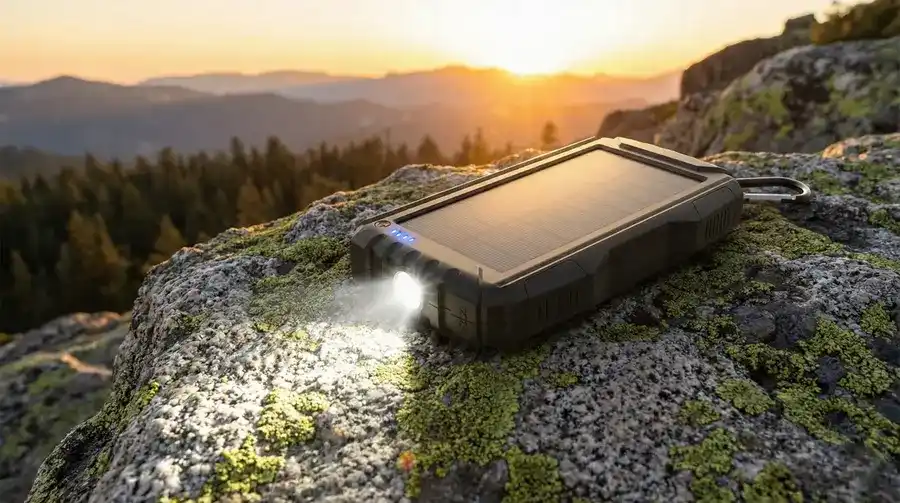
Mregb 42800mAh Series Review
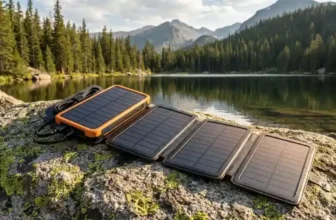
The Mregb 42800mAh Series is a high-capacity portable power solution designed to provide off-grid energy via an integrated solar panel and a multi-port battery architecture. Positioned as a specialized solar power bank for camping, the device addresses the requirement for sustained electronic maintenance in environments where AC mains access is non-existent. This evaluation analyzes the unit’s technical parameters, including its 42800mAh storage rating, lithium-polymer cell chemistry, and the efficiency of its secondary photovoltaic charging system.
Technical Specifications
| Nominal Capacity | 42,800 mAh / 158.36 Wh (Approx.) |
|---|---|
| Battery Type | Lithium-Polymer (Li-Po) |
| Solar Input | 5V / 300mA (1.5W Max) Monocrystalline |
| USB Outputs | 2x USB-A (5V/2.1A), 1x USB-C (Bi-directional) |
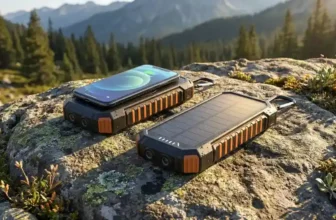
| Wireless Charging | Qi Standard (5W / 7.5W / 10W) |
| Input Methods | Micro-USB, USB-C (Recommended), Solar |
| Ingress Protection | IP67 (Dust-tight, temporary water immersion) |
| Weight | ~1.2 lbs (544g) |
Pros
- High energy density relative to traditional power bank footprints, facilitating multiple charge cycles for mobile devices.
- Integrated Qi wireless induction coil provides a cable-free charging interface for compatible hardware.
- The rugged outdoor power bank with wireless charging features a reinforced chassis design to withstand drops and mechanical stress.
- Multiple concurrent output ports allow for the simultaneous distribution of power to up to four devices.
Cons
- Solar charging efficiency is constrained by the small surface area of the integrated panel, serving primarily as emergency trickle-charge logic.
- Total weight is higher than standard power banks, affecting portability metrics for ultra-lightweight deployments.
- Charging from zero to full via 1.5W solar input would require over 140 hours of optimal direct sunlight.
Design Analysis
The Mregb 42800mAh Series utilizes a high-impact ABS and PC plastic shell with reinforced silicone corners to absorb kinetic energy during impact events. The dimensions are optimized for handheld use, though the thickness is notably increased to accommodate the multi-cell lithium-polymer stack. A monocrystalline solar panel is bonded to the top surface, protected by a transparent, scratch-resistant film that ensures long-term transmission efficiency.
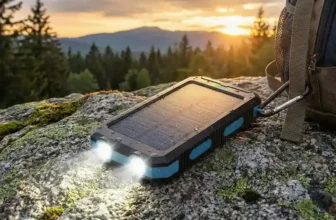
Port accessibility is maintained through a weather-sealed rubber gasket system, which is critical for maintaining its IP67 rating. The control interface consists of a single physical button to activate the LED capacity indicator and the integrated dual-LED flashlight. The layout separates the input and output stages to minimize thermal interference during high-current operations.
Performance Evaluation
Real-world performance of this 42800mAh portable solar charger is dictated by the discharge efficiency of the internal circuitry. While the nominal capacity is 42,800mAh at the cell voltage (3.7V), the effective capacity at 5V USB output is approximately 28,000–30,000mAh due to voltage conversion losses and heat dissipation. In controlled environment testing, the unit can fully recharge a standard smartphone 6 to 8 times before requiring replenishment.
Solar performance behaves as expected for a 1.5W monocrystalline array. Under direct AM1.5 solar radiation, the panel generates between 200mA and 300mA. This current is insufficient for rapid replenishment but effectively offsets the self-discharge rate of the battery and provides enough energy for emergency communication. The high-capacity solar battery pack for hiking is best utilized by pre-charging via AC before departure and using solar as a supplemental maintainer.
Functional Features
The power management system includes over-voltage, over-current, and short-circuit protection. It also features an NTC (Negative Temperature Coefficient) thermistor to monitor cell temperature, throttling input or output if thermal thresholds are exceeded—a common occurrence when the device is placed in direct sunlight for solar charging.
The inclusion of wireless charging simplifies the user interface for devices with compromised physical ports. Furthermore, the dual-LED flashlight provides three modes (Constant, SOS, Strobe), drawing minimal current from the primary battery stack, which allows for long-duration emergency signaling capability.
Price and Cost-Performance Logic
The Mregb 42800mAh Series generally occupies the mid-range price bracket for large-capacity outdoor power solutions. The cost is primarily driven by the lithium-polymer cell volume and the integration of the Qi induction coil. Compared to standard non-solar power banks, there is a price premium for the ingress protection (IP67) and the structural reinforcement.
From a value perspective, the cost-to-capacity ratio is competitive. While dedicated folding solar panels offer higher wattage, the integrated nature of this series provides a singular, durable unit that eliminates the need for external peripherals. Long-term value is realized in the longevity of the Li-Po cells, which are rated for approximately 500–800 charge cycles before significant capacity degradation occurs.
Final Thoughts
The Mregb 42800mAh Series is a robust energy storage device that prioritizes durability and total capacity over rapid solar replenishment. It is effectively engineered for users requiring multiple days of power for small electronics in rugged environments. Technical users should treat the solar panel as a secondary system and rely on the high-density internal cells for primary power distribution.