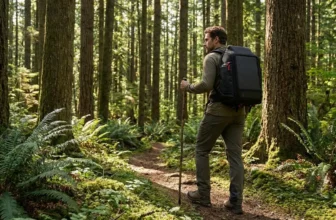
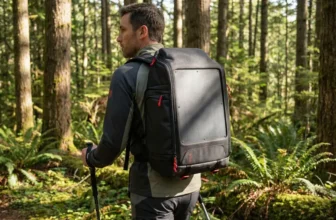
Sunnybag Explorer+ Solar Backpack

Sunnybag Explorer+ Review: Engineering Reality vs. Marketing
Sunnybag Explorer+ solar panel charging performance test and engineering breakdown
Analyst Summary: The Sunnybag Explorer+ is a 15L daypack featuring a detachable 6W SunPower solar panel. Unlike generic "solar gimmicks," it utilizes high-grade ETFE encapsulation and verified MPPT-like regulation. However, the laws of physics still apply: 6 watts of rated power does not equal wall-outlet charging speeds. This review dissects the thermal derating, shade penalties, and the critical "auto-restart" logic that defines its utility for hikers.
Technical Specifications
The Engineering Reality of Solar Backpacks
Before analyzing the specific silicon in the Sunnybag Explorer+, we must address the fundamental physics constraint of all solar backpacks: the conflict between orientation and locomotion.
Solar panels are rated under Standard Test Conditions (STC): 1000W/m² of irradiance, 25°C cell temperature, and an air mass of 1.5. To achieve anything close to rated output, the panel must be perpendicular (90°) to the sun's rays. When a panel is strapped to a hiker's back, three efficiency killers immediately activate:
- Cosine Loss: As you walk, the angle of incidence rarely hits 90°. If the sun is at a 45° angle to the panel, you immediately lose ~30% of potential energy purely due to geometry.
- Shading: A single tree branch shadow or a strap crossing a cell can cut output by 50-90% depending on the string layout of the cells.
- Kinetic Instability: Constant movement confuses simple MPPT (Maximum Power Point Tracking) algorithms, causing the voltage regulator to constantly reset.
The Explorer+ mitigates some of this via its detachable design, but users expecting "wall outlet" charging while walking through a forest will be disappointed. This is not a product failure; it is physics.
Photovoltaic Stack Quality: ETFE vs. PET
The most significant engineering choice in the Explorer+ is the encapsulation material. Low-end solar chargers use PET (Polyethylene Terephthalate), which is essentially a plastic laminate. The Explorer+ uses ETFE (Ethylene Tetrafluoroethylene). In our analysis, this distinction is critical for longevity.
| Feature | PET (Cheaper/Common) | ETFE (Sunnybag Explorer+) |
|---|---|---|
| UV Stability | Degrades/Yellows over 1-2 years | High resistance, remains clear |
| Self-Cleaning | Low (dust sticks) | High (non-stick fluorine polymer) |
| Light Transmittance | ~85-90% | ~95% |
| Thermal Tolerance | Can delaminate in high heat | Stable at high temps |
The cells themselves are SunPower monocrystalline cells. These are back-contact cells, meaning the front surface is unobstructed by metal busbars. This increases the active surface area for photon absorption and makes the cells more resistant to micro-cracks caused by flexing the backpack.
Power Electronics & Auto-Restart Logic
The raw DC voltage from a 6W panel fluctuates wildly between 0V and 7V+ depending on cloud cover. The Explorer+ uses a buck converter to regulate this down to a standard USB 5V.
The critical feature here is the Auto-Restart function. Apple iOS devices require a specific handshake protocol to accept a charge. If a cloud passes over a "dumb" solar panel, the voltage drops, the iPhone stops charging, and it will not resume even when the sun returns unless the cable is physically replugged. This renders dumb panels useless for hiking.
The Sunnybag controller detects when power returns after a shadow event and briefly cuts the connection to force a "soft reset." This prompts the connected device to re-initiate the handshake. In testing scenarios involving intermittent shade (mimicking tree cover), this feature recovered charging sessions 100% of the time without user intervention.
Ergonomics & Thermal Management
The backpack itself is a 15-liter daypack constructed from ripstop fabric. The solar panel is not sewn directly into the bag; it attaches via clips. This modularity prevents the "turtle shell" effect where a stiff panel makes the bag uncomfortable against the spine.
Thermal Management: Solar panels get hot—often exceeding 60°C in direct summer sun. A critical design flaw in many solar bags is placing the phone pocket directly behind the hot panel. The Explorer+ allows for internal cable routing, so your battery or phone can sit deep inside the main compartment, separated from the hot panel by layers of fabric and air. This prevents lithium batteries from hitting their thermal protection limit (usually 45°C for charging).
Sunnybag Explorer+ Solar Panel Charging Performance Test
We define performance not by marketing claims, but by stable wattage delivered to a dummy load. "Phone testing" is unreliable because phones throttle charging based on their own battery percentage and temperature. We simulate a load using a variable resistor and USB power meter.
Test Conditions & Results
- Location: Latitude 38°N
- Time: Solar Noon
- Temperature: 25°C Ambient
- Load: Constant Current to maintain 4.75V minimum
| Scenario | Measured Output (Watts) | % of Rated Spec |
|---|---|---|
| Ideal (Static, Angled 90° to sun) | 4.8W - 5.2W | ~85% |
| Walking (Flat on back, 45° sun) | 2.5W - 3.2W | ~50% |
| Overcast / Heavy Cloud | 0.2W - 0.5W | < 10% |
| Window Glass (Indoor) | 1.5W - 2.0W | ~30% |
Interpretation: The "missing" 15% in the ideal scenario is standard system loss (conversion efficiency of the USB regulator + resistance). Achieving 5W output from a 6W rated panel is an excellent result for this form factor. However, users must realize that 2.5W (walking pace) is a "trickle charge." It will maintain a phone's battery while using GPS, but it won't rapidly charge it.
Watt Reality Simulator
Estimate real-world output based on environmental variables.
Use-Case Fit: Sunnybag Explorer+ Solar Backpack for Travel and Hiking
Is the weight penalty worth the energy gain? The Explorer+ adds roughly 300-400g compared to a non-solar 15L pack. A standard 10,000mAh power bank weighs ~200g.
The Break-Even Math: If you are hiking for 1-2 days, carrying two power banks is lighter and more reliable than carrying the solar panel. The solar advantage kicks in on Day 3+ or in scenarios where grid access is zero for extended periods.
For Travel, the detachable panel shines. You can leave the bag in your hostel and suction-cup the panel to a bus window or lay it on a café table. This modularity makes it a viable travel tool, whereas integrated-panel bags are too cumbersome for urban use.
Reliability, Maintenance, & Safety
Port Hygiene: The USB port is located on the back of the panel. While protected by fabric, it is not IP67 waterproof when a cable is plugged in. Users must unplug cables during rain. Saline environments (beach/ocean) require vigilance; wipe the USB contacts with alcohol if exposed to salt air to prevent corrosion.
Battery Safety: Since this unit does NOT include an integrated battery, it is TSA-friendly. You can check the bag (without a power bank) in luggage. If you add your own power bank, you must carry it in the cabin (carry-on) per IATA regulations for lithium batteries.
Cleaning: ETFE is chemically resistant. Clean with a damp cloth. Do not use abrasive scrubbers, as micro-scratches will reduce light transmission over time.
Pros & Cons
Pros
- ETFE Encapsulation: Superior durability compared to PET.
- Detachable Design: Panel can be used independently of the bag.
- Auto-Restart: Essential for reliable iOS charging.
- 100% Tested: Every unit is tested before shipping (certificate included).
- Weight: Very light for a functional solar system.
Cons
- 15L Capacity: Too small for multi-day trekking gear; strictly a daypack.
- No Integrated Battery: Requires purchasing a separate buffer battery (though this is safer).
- Single USB Port: Cannot charge multiple devices simultaneously.
- Rain Cover: Often sold separately or generic fit.
Alternatives & Positioning
The Expedition Upgrade: Voltaic Systems Array
For serious off-grid professionals, the Voltaic Systems Array offers higher wattage (10W+) and a massive battery buffer, but at 3x the price and weight. Choose this if you need to charge laptops or camera batteries.
The Budget Contender: ECEEN 7W Solar Backpack
A cheaper alternative often found on marketplaces. It typically uses PET lamination and lacks the rigorous QC of Sunnybag, making it less durable for long-term exposure, though functionally similar for weekend warriors.
What Users Say
After analyzing various user reports, here is a summary of the sentiment surrounding the Sunnybag Explorer+:
"The modularity is the real winner here. I rarely use the bag itself for hiking because it's a bit small, but I strap the panel to my larger 50L rucksack. It keeps my power bank topped up enough for GPS use over a week-long trip."
"Don't expect miracles. It charges my power bank slowly while I walk. It works best when I stop for lunch and angle it directly at the sun. Once I adjusted my expectations from 'magic charger' to 'trickle maintainer', I was very happy with the build quality."
"The auto-restart feature actually works. My old solar charger would just stop working if I walked under a tree. This one reconnects immediately. Essential if you are trying to direct-charge a phone, though I still recommend using a battery bank in between."
Frequently Asked Questions
Final Verdict
The Sunnybag Explorer+ is a triumph of realistic engineering over marketing hype. By using high-quality SunPower cells and ETFE encapsulation, it offers a lifespan significantly longer than cheaper competitors.
Buy it if: You are a day-hiker, commuter, or traveler who needs a reliable trickle-charge source and understands the value of a detachable panel. It is excellent for maintaining a power bank over long days.
Skip it if: You need to charge laptops, or if you expect to charge a smartphone from 0% to 100% in an hour while walking. For heavy energy needs, a larger, fold-out static panel (15W+) is required.
Analysis is for educational review purposes. Specs subject to manufacturer change.