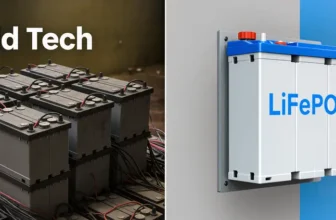
Lead Acid Solar Batteries remain the entry point for homeowners and researchers who want reliable storage without the price tag of lithium. This guide presents the facts without embellishment so beginners can understand how these systems work and why they remain viable in 2026. The goal is to give you structural clarity on the technology, the differences between AGM and Gel variations, and how to evaluate cost, sizing, and purchasing decisions with minimal confusion.
Introduction
Lead Acid Solar Batteries continue to hold their position in the renewable-energy market because the underlying chemistry is predictable, mature, and inexpensive to maintain. Even as lithium-ion options expand, many households still choose this older chemistry because the infrastructure supporting it is widespread, and the behavior of the batteries is well-documented. A lead-acid solar battery uses plates of lead and lead dioxide submerged or suspended in an electrolyte solution. When sunlight charges a solar array, the stored energy in these batteries becomes a buffer for nighttime and cloudy-day loads. The appeal centers on predictable performance, affordable replacement costs, and compatibility with nearly every off-grid or hybrid solar configuration built in the last two decades.
These batteries remain cost-effective because the supply chain is stable, the recycling market is advanced, and the technology has not radically changed since the early 20th century. This consistency lowers manufacturing costs and keeps replacement options accessible. For a homeowner seeking dependable storage without steep upfront investment, the structure and limitations of lead-acid chemistry are familiar and manageable.
The Technology: AGM vs. Gel
Lead-acid batteries fall into three primary categories: Flooded (also called Wet), Absorbent Glass Mat (AGM), and Gel. Flooded batteries rely on free-flowing liquid electrolyte and require venting and periodic maintenance such as topping off water levels. They also produce small amounts of gas during charging. Although they remain affordable, their maintenance profile pushes many homeowners toward sealed variations.
AGM batteries use a fiberglass mat that absorbs the electrolyte. This immobilizes the acid and allows the battery to deliver high current output without the risk of spills. Because the internal resistance is low, these batteries can handle higher surge loads and recover quickly. AGM designs perform well in cold climates, where the reduced temperature slows chemical reactions. The sealed casing restricts evaporation, and the internal pressure valves manage minor off-gassing under heavy charging. These units are commonly found in backup power installations, moderate off-grid cabins, and RV systems.
Gel batteries rely on silica to thicken the electrolyte into a stable gel. The material supports deep discharge recovery and tolerates higher ambient temperatures. Because the gelled electrolyte reduces internal stratification, these batteries respond well to long, slow discharges. They are often deployed in hot-climate installations, telecom base stations, and solar arrays designed for daily cycling. The stability of the gel offers consistent delivery even when installation sites experience uneven temperatures or prolonged warm seasons.
Both AGM and Gel options fall under the broader category of sealed lead-acid batteries, and both reduce the maintenance workload compared to flooded designs. Their advantages differ based on climate, discharge patterns, and charging behavior.
Finding the Best AGM Deep Cycle Batteries For Solar Energy Storage
Selecting AGM configurations requires focusing on measurable performance characteristics. A typical cycle life for deep-cycle AGM batteries ranges between 500 and 1000 cycles at 50 percent depth of discharge. Some premium units exceed this range, but the majority of cost-effective models cluster within it. These are practical limits of the chemistry rather than manufacturing flaws.
C-ratings indicate how quickly a battery can safely deliver or absorb current relative to its capacity. AGM designs often support higher C-rates than Gel alternatives, which makes them suitable for systems that experience surges from inverters or intermittent high-draw appliances. When evaluating options, confirm the continuous discharge rating and match it with the system’s peak loads. Batteries with lower internal resistance provide smoother output and maintain voltage stability during heavy use.
Brand reliability matters. Established manufacturers publish clear technical datasheets with cycle curves, recommended charging voltages, and temperature considerations. Warranty terms reveal how confident a company is in its product. Multi-year warranties with proportional coverage typically indicate higher durability. The best choices combine predictable deep-cycle behavior with strong documentation and accessible support channels.
When analyzing the best AGM deep cycle batteries for solar energy storage, prioritize charge acceptance, low internal resistance, strong warranty details, and realistic cycle-life expectations. These factors determine long-term value and ensure that the chosen units align with daily load requirements.
Building Affordable Sealed Lead Acid Battery Banks For Home Solar
Sizing an energy-storage setup requires understanding daily energy use rather than guessing. Begin by totaling the watt-hours your home consumes during the critical backup or off-grid window. Convert that figure to amp-hours by dividing by system voltage. For example, 2500 watt-hours on a 12-volt system amounts to roughly 208 amp-hours. Because lead-acid chemistry should not be routinely discharged below 50 percent to preserve cycle life, double that requirement. This simple method ensures margin for battery longevity and weather fluctuations.
Wiring configurations determine voltage. Connecting batteries in series increases voltage while keeping amp-hours constant. Connecting in parallel increases amp-hours while maintaining voltage. Systems built for 24-volt or 48-volt operation gain efficiency, reduce current requirements, and allow smaller-gauge wiring. Proper configuration depends on inverter specifications and system design. Ensuring balanced wiring across parallel strings prevents uneven charging or early failure of individual units.
The primary appeal of affordable sealed lead acid battery banks for home solar is the low entry cost compared to lithium alternatives. Although lithium-iron-phosphate batteries offer superior cycle life and depth-of-discharge flexibility, they carry higher upfront cost. A sealed lead-acid bank can deliver practical backup capacity at a fraction of that price. Replacement intervals will be shorter, but the initial investment aligns with budgets that prioritize immediate functionality over extended longevity.
Cost analysis should include shipping, installation hardware, and protective enclosures. Despite lower energy density, sealed lead-acid configurations remain viable for households that need backup power for essential loads without significant financial strain.
Where to Buy Gel Lead Acid Batteries For Off Grid Systems
Distribution channels for Gel batteries vary, but most buyers choose between local authorized dealers, online specialty retailers, and general e-commerce platforms. Because these batteries are heavy, shipping charges influence total cost. Freight shipping can add a significant premium, so vendors that offer free shipping or subsidized freight options reduce overall expense. Local pickup bypasses shipping risk and allows visual inspection before purchase.
Checking the manufacturing date code is important. Lead-acid batteries degrade on the shelf when not periodically charged. A unit that has been idle for months may suffer sulfation, reducing capacity and shortening lifespan. Retailers with high turnover rates typically offer fresher stock. If a vendor cannot verify date codes, consider alternatives with transparent labeling or responsive customer support.
When evaluating where to buy Gel lead acid batteries for off grid systems, compare warranty terms, shipping policies, and stock freshness. Confirm that the seller provides technical documentation and clear specifications, including recommended charge voltages and acceptable operating temperatures. Off-grid users rely on predictable cycling, so manufacturer information should be comprehensive rather than promotional.
Avoid sellers that provide only basic product descriptions without datasheets. Verify whether returns are accepted in case batteries arrive damaged or with inconsistent voltage readings. A responsible vendor packages batteries securely and tests them before shipment.
Maintenance & Safety
Sealed batteries reduce maintenance demand, but they are not maintenance-free. Even AGM and Gel units release minor gas under heavy charging. Installations require ventilation to prevent buildup, especially in enclosed battery boxes or indoor utility rooms. Avoid placing sealed lead-acid batteries in living spaces or near spark-producing equipment.
Temperature compensation is central to proper charging. Charge controllers with external temperature sensors adjust voltage set points to protect the chemistry. Cold batteries require higher charging voltages; warm batteries require lower ones. Without compensation, batteries risk undercharging in winter or overcharging in summer, each of which reduces cycle life. Many modern solar charge controllers include built-in temperature compensation, but confirm compatibility before installation.
Equalization charging is a controlled overcharge designed to rebalance flooded batteries. Sealed AGM and Gel variants generally should not undergo equalization. If a manufacturer recommends it, the voltage parameters are narrow and must be followed precisely. Over-voltage during equalization harms sealed units by driving gas pressure beyond valve limits, potentially causing permanent damage. Adhering to manufacturer charging ranges protects capacity and longevity.
Routine checks should include verifying terminal tightness, inspecting for bulging or heat marks, and ensuring the charge controller logs reflect clean, stable charging cycles. Avoid rapid discharge below recommended depth-of-discharge thresholds to preserve cycle life.
Lead Acid Solar Batteries remain viable for individuals seeking dependable and affordable storage in 2026. The chemistry is simple, predictable, and supported by a global recycling network. AGM and Gel variants cover different environmental and cycling conditions, allowing users to match performance characteristics to their specific needs. Beginners and researchers evaluating the best AGM deep cycle batteries for solar energy storage will find that performance depends on cycle life, discharge tolerance, brand transparency, and warranty structure. Homeowners building affordable sealed lead acid battery banks for home solar systems can achieve functional storage at modest cost by sizing correctly and wiring safely. Off-grid users who need to buy gel lead acid batteries for off grid systems must evaluate shipping, date codes, and vendor reliability.
This guide provides the factual structure needed to make informed decisions.